

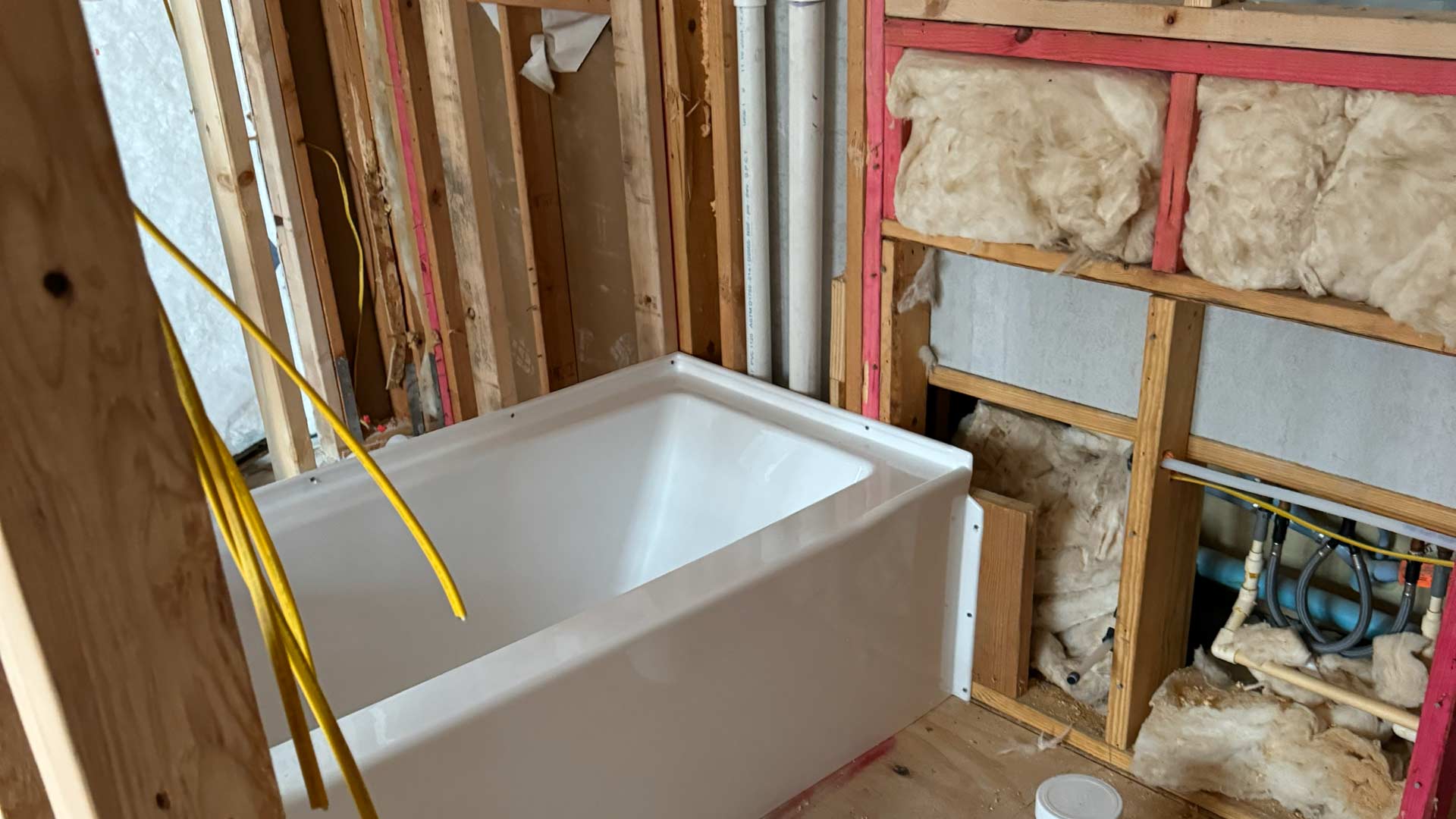
Houston homeowners face a unique challenge: keeping their homes comfortable while battling some of the highest utility bills in Texas. With summer temperatures regularly exceeding 100°F and humidity that strains air conditioning, energy-efficient remodeling isn’t just a nice-to-have. It’s become essential for protecting both your wallet and your sanity.
At Houston Builders, we’ve spent over a decade helping families across Harris, Fort Bend, Galveston, Brazoria, and Montgomery Counties transform their homes into energy-saving powerhouses. We recently completed a whole-home efficiency upgrade about 1.5 miles from the Galleria that cut the homeowner’s summer electric bills by 38%. That’s real money staying in your pocket, month after month.

Why Energy-Efficient Remodeling Matters in Houston’s Climate
Houston is in Climate Zone 2, which means we experience intense heat, high humidity, and occasional freezing temperatures that can stress home systems to their limits. The Gulf Coast’s subtropical climate creates specific demands that cookie-cutter energy solutions can’t address. Your home needs upgrades designed for our weather patterns, not something pulled from a catalog meant for homes in Ohio.
The Texas energy market adds another layer of complexity. With deregulated electricity and prices that spike during peak-demand periods, an inefficient home can cost you thousands more per year. Many of our remodeling projects in the Houston metro focus heavily on reducing energy waste because that’s where homeowners see the fastest return on their investment.
“Houston’s clay soil creates foundation movement that opens gaps around windows and doors. I’ve seen homes where the AC runs constantly because of air leaks the homeowners didn’t even know existed. Before we start any energy-efficient remodeling project, we do a full envelope assessment to find where the conditioned air is escaping.”

HVAC System Upgrades: The Biggest Energy Saver
Your heating and cooling system accounts for roughly 50-60% of your home’s total energy use in Houston. An outdated or undersized HVAC system not only wastes energy, but it also struggles to keep up with extreme temperatures and fails when you need it most.
Modern high-efficiency systems with variable-speed compressors adjust their output based on actual demand rather than cycling on and off. This approach uses less energy, provides more consistent temperatures, and extends equipment life. When combined with proper room additions and conversions that maintain efficient airflow, these systems transform home comfort.
| HVAC Upgrade Option | Efficiency Rating | Estimated Cost (Installed) | Annual Savings | Payback Period |
|---|---|---|---|---|
| Standard Efficiency Replacement (14 SEER) | 14 SEER | $8,100 – $10,800 | $320 – $480 | 8-10 years |
| High-Efficiency System (18 SEER) | 18 SEER | $12,150 – $16,200 | $540 – $810 | 6-8 years |
| Variable Speed System (20+ SEER) | 20-24 SEER | $16,200 – $24,300 | $810 – $1,215 | 5-7 years |
| Ductless Mini-Split (per zone) | 20-30 SEER | $4,050 – $6,750 | $270 – $405 | 4-6 years |
| Geothermal Heat Pump | 400%+ efficiency | $27,000 – $40,500 | $1,350 – $2,025 | 8-12 years |
Duct sealing and insulation often get overlooked, but they’re critical in Houston homes. We find that most houses built before 2010 lose 20-30% of conditioned air through duct leaks. Our crews seal and insulate ductwork on every HVAC project to maximize the value of your new equipment.

Insulation and Air Sealing: Your Home’s First Defense
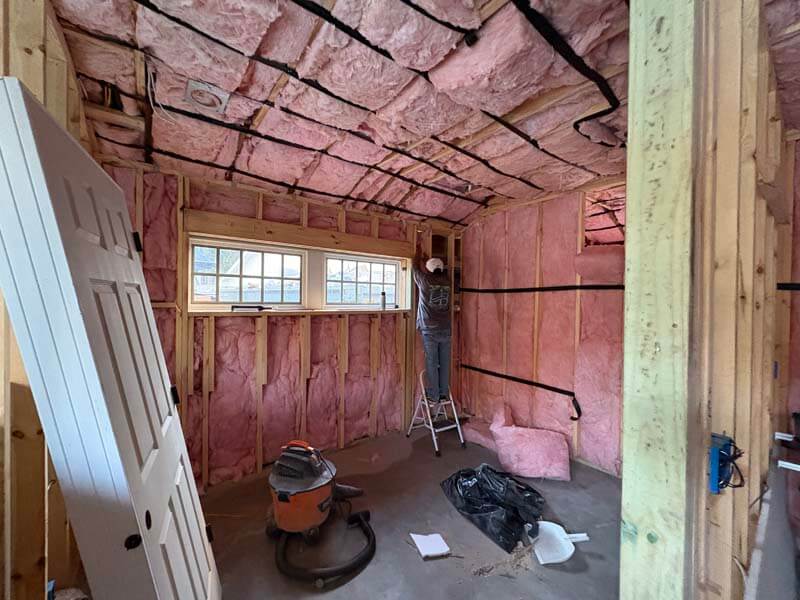
Proper insulation creates a thermal barrier between your conditioned living space and Houston’s brutal outdoor temperatures. But insulation alone isn’t enough. Air sealing addresses gaps, cracks, and penetrations that allow outside air to infiltrate your home, bringing heat and humidity with it.
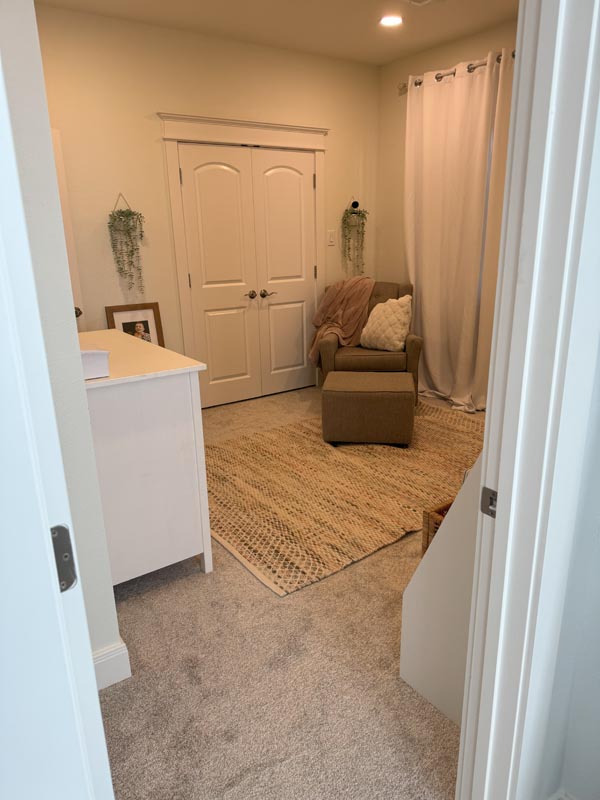
Texas building codes for Climate Zone 2 require specific insulation levels, but many older Houston homes fall far short of these standards. Upgrading attic insulation from R-19 to R-38 or higher can reduce cooling costs by 15-25% during our long summers. We often combine insulation upgrades with exterior paint and siding projects to address multiple efficiency issues at once.
| Insulation Type | R-Value per Inch | Cost per Sq Ft (Installed) | Best Application | Lifespan |
|---|---|---|---|---|
| Blown Fiberglass | R-2.2 to R-2.7 | $1.35 – $2.03 | Attic floors | 20-30 years |
| Blown Cellulose | R-3.2 to R-3.8 | $1.62 – $2.30 | Attic floors, walls | 20-30 years |
| Spray Foam (Open Cell) | R-3.5 to R-3.7 | $1.89 – $2.70 | Walls, roof deck | 80+ years |
| Spray Foam (Closed Cell) | R-6.0 to R-7.0 | $2.70 – $4.05 | Roof deck, crawl spaces | 80+ years |
| Rigid Foam Board | R-3.8 to R-6.5 | $2.03 – $3.38 | Exterior walls, foundation | 50+ years |
| Radiant Barrier | Blocks 95% radiant heat | $0.95 – $1.62 | Attic rafters | 25+ years |
For a detailed breakdown of project costs in our area, see our guide to remodeling contractor pricing in Houston. We believe in transparent pricing so you can plan your budget accurately.
“The biggest mistake I see homeowners make is adding insulation without air sealing first. You can pile insulation a foot deep in your attic, but if you’ve got gaps around light fixtures, plumbing penetrations, and the attic hatch, you’re still losing conditioned air. We always seal before we insulate because that’s what actually works.”

Window and Door Upgrades: Stopping Energy Loss
Windows and doors represent the weak points in your home’s thermal envelope. Single-pane windows standard in older Houston homes offer almost no insulation, and even double-pane windows installed more than 15 years ago often have compromised seals that allow heat transfer.
Energy Star-qualified windows for Climate Zone 2 must meet specific performance criteria. The U-factor should be 0.40 or lower, while the Solar Heat Gain Coefficient (SHGC) should be 0.25 or lower to reduce solar heat gain.
| Window Type | U-Factor | SHGC | Cost per Window (Installed) | Energy Savings |
|---|---|---|---|---|
| Single Pane (Existing) | 1.0+ | 0.80+ | N/A – Replacement Needed | Baseline |
| Double Pane Clear | 0.50 | 0.56 | $540 – $810 | 15-20% |
| Double Pane Low-E | 0.35 | 0.30 | $675 – $1,080 | 25-35% |
| Triple Pane Low-E | 0.20 | 0.25 | $1,080 – $1,620 | 35-45% |
| Impact-Resistant Low-E | 0.30 | 0.25 | $945 – $1,485 | 30-40% |
Beyond the windows themselves, proper installation matters enormously. Gaps between the window frame and the rough opening allow air infiltration, undermining the window’s efficiency. Our installation teams use foam sealant, weatherstripping, and proper flashing to ensure your new windows perform as designed. Learn more about the Houston construction permit process for window replacement projects.

Kitchen Remodeling with Energy Efficiency in Mind
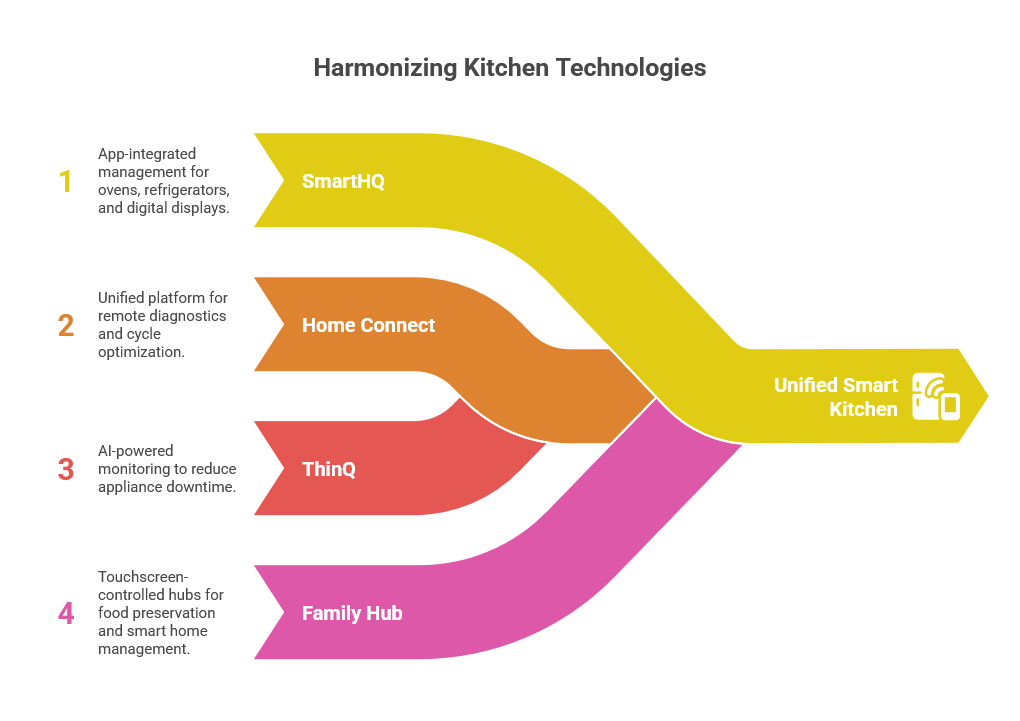
The kitchen is often the most energy-intensive room in your home. Across refrigeration, cooking, lighting, and ventilation, this space offers significant opportunities to improve efficiency. A well-planned kitchen remodel can reduce your home’s total energy use by 10-15%.
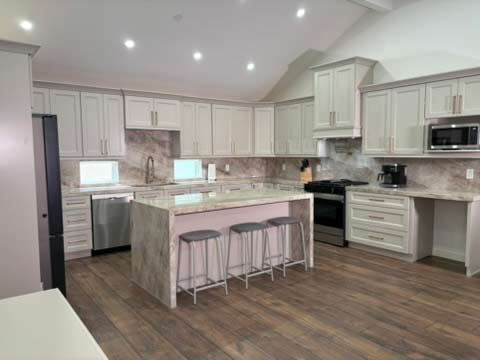
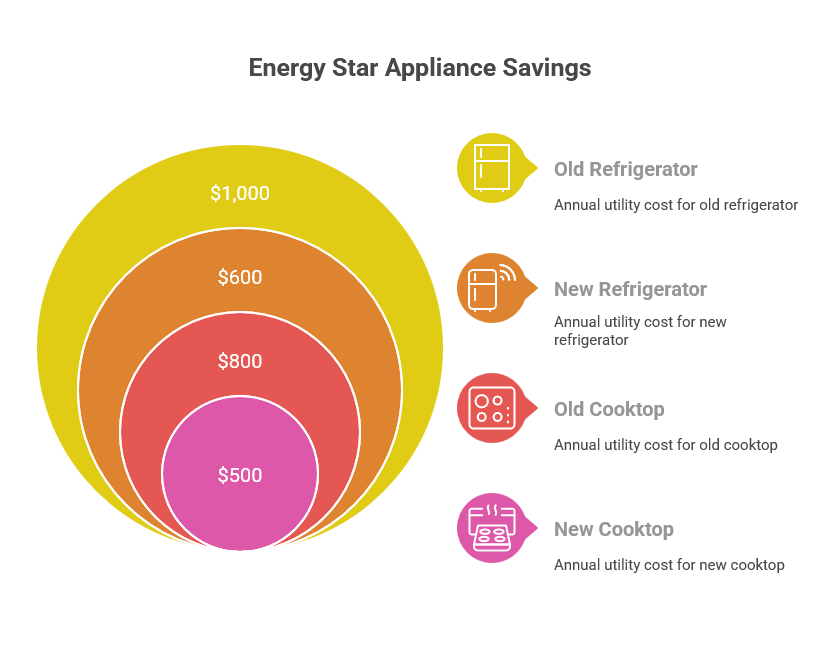
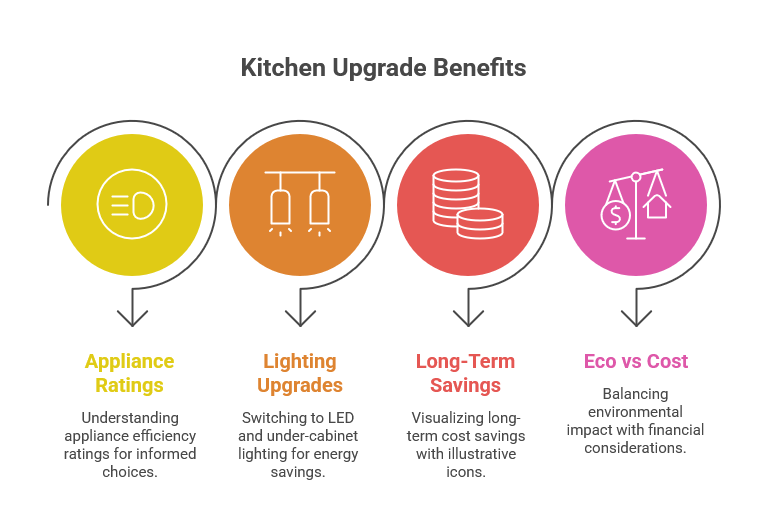
Modern Energy Star appliances use dramatically less electricity than models from even ten years ago. A new refrigerator might use 400 kWh per year compared to 700+ kWh for an older model. Induction cooktops transfer 85-90% of energy directly to cookware, compared with 40% for traditional gas ranges.
Watch how we approach kitchen transformations with efficiency built in from the start:
For more inspiration, browse our kitchen remodel project showcase and affordable kitchen remodel options to see how we balance efficiency with aesthetics.
| Kitchen Appliance | Standard Model (Annual kWh) | Energy Star Model (Annual kWh) | Upgrade Cost | 10-Year Savings |
|---|---|---|---|---|
| Refrigerator (French Door) | 700 kWh | 420 kWh | $2,025 – $4,050 | $380 – $530 |
| Dishwasher | 350 kWh | 240 kWh | $810 – $1,620 | $150 – $210 |
| Electric Range | 700 kWh | 550 kWh (Induction) | $1,350 – $2,700 | $200 – $280 |
| Range Hood | 200 kWh | 100 kWh | $540 – $1,350 | $135 – $190 |
| LED Under-Cabinet Lighting | 150 kWh (Halogen) | 30 kWh | $405 – $810 | $160 – $230 |
Get a complete picture of project costs with our Houston kitchen remodeling cost guide.

Bathroom Efficiency Upgrades
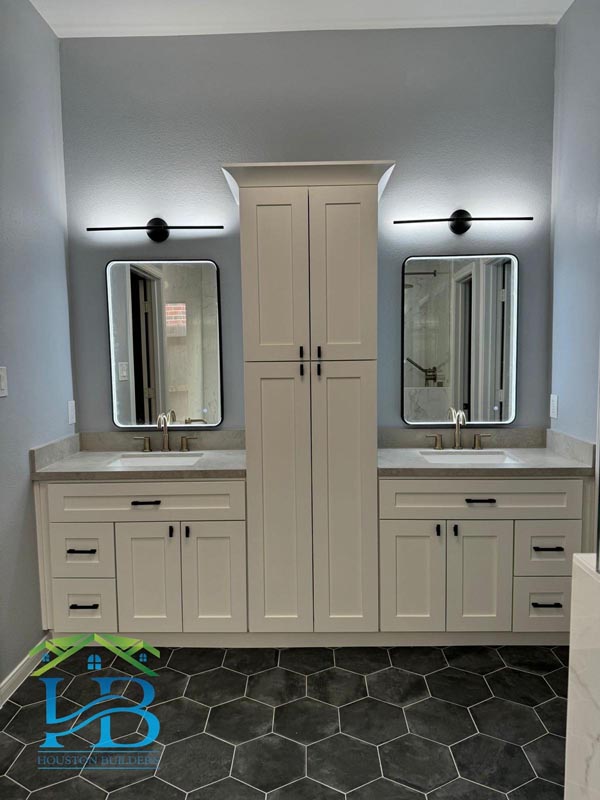
Water heating accounts for roughly 18% of home energy use, making bathroom remodeling a prime opportunity for WatSens- efficiency. WaterSense-certified fixtures reduce both water consumption and energy use, meeting delsav requirements and delivering savings with every use.
Low-flow showerheads have come a long way from the trickle-style models of the past. Today’s WaterSense showerheads use 2.0 gallons per minute or less while providing satisfying water pressure through aerated spray patterns. Faucets that meet WaterSense standards use 1.5 gpm, compared with the standard 2.2 gpm. For detailed pricing, see our bathroom remodel cost breakdown.
Tankless water heaters eliminate the standby energy loss that traditional tank heaters suffer. Instead of keeping 40-80 gallons constantly heated, tankless units heat water on demand. They cost more upfront but can reduce water-heating costs by 24-34% for homes using 41 gallons or less per day.

Lighting: Simple Changes with Big Impact
Lighting typically accounts for 10-15% of residential electricity use. Switching from incandescent bulbs to LED throughout your home is one of the simplest and most cost-effective energy efficiency improvements available. LEDs use 75% less energy and last 25 times longer than incandescent bulbs.
Beyond bulb replacement, consider these lighting efficiency strategies during your remodel:
- Install dimmer switches to reduce energy use when full brightness isn’t needed
- Add occupancy sensors in bathrooms, closets, and garages to eliminate forgotten lights
- Maximize natural daylight with strategically placed windows or skylights
- Use task lighting instead of overhead fixtures to illuminate only the needed areas
- Choose light fixtures designed for LED bulbs to optimize their efficiency
Our flooring and stair projects often include upgraded lighting to improve safety and efficiency throughout the home.

Water Heater Options and Hot Water Distribution
After HVAC, water heating represents your second-largest energy expense. Houston homeowners have several options to reduce this cost, each with distinct advantages depending on their home’s configuration and usage patterns.
| Water Heater Type | Energy Factor | Installed Cost | Operating Cost (Annual) | Lifespan |
|---|---|---|---|---|
| Standard Gas Tank (50 gal) | 0.59-0.65 | $1,620 – $2,430 | $340 – $405 | 10-15 years |
| High-Efficiency Gas Tank | 0.67-0.70 | $2,160 – $3,240 | $270 – $340 | 12-15 years |
| Tankless Gas | 0.82-0.96 | $3,510 – $5,400 | $200 – $270 | 20+ years |
| Heat Pump (Hybrid) | 2.0-3.5 | $2,970 – $4,590 | $135 – $200 | 13-15 years |
| Solar with Electric Backup | N/A (solar fraction) | $5,400 – $8,100 | $70 – $135 | 20+ years |
“I always tell homeowners to think about their remodel as a system, not a collection of individual upgrades. When you improve insulation, your HVAC doesn’t work as hard. When you seal air leaks, your new insulation performs better. When you add efficient appliances, your electrical panel has capacity for future needs. Everything connects.”

Cool Roofing and Exterior Improvements
Your roof absorbs tremendous solar heat during Houston summers. Standard dark shingles can reach temperatures of 150°F or higher, transferring that heat into your attic and eventually your living space. Cool roofing materials reflect more sunlight and emit absorbed heat more efficiently.
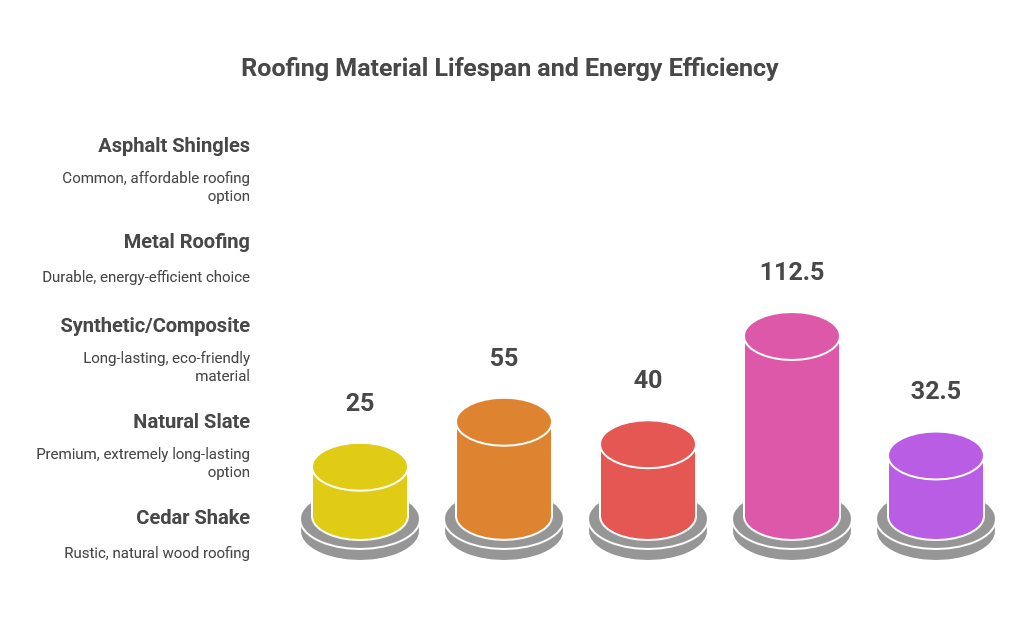
When roof replacement is needed, consider these efficiency-focused options. Metal roofing with reflective coatings can reduce roof surface temperatures by 50-60°F compared to standard shingles. Lighter-colored shingles with cool roof ratings offer improved performance ata lower cost. Proper attic ventilation works alongside cool roofing to minimize heat transfer. See our roofing repair cost guide for detailed pricing.
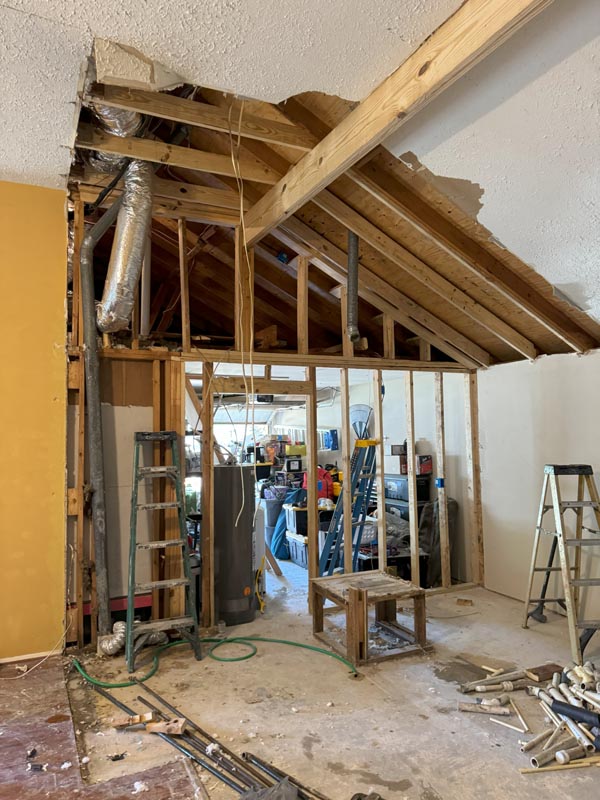
Radiant barriers installed under the roof deck can reduce attic temperatures by 20-30°F, easing the Load on your air conditioning system. This upgrade (typically $0.95-$1.62 per square foot installed) often pays for itself within 2-3 years.

Project Speed: Getting Results Faster
Most Houston contractors take 6-8 weeks for a standard kitchen remodel and 4-6 weeks for bathroom projects. At Houston Builders, we complete these same projects in roughly half that time without cutting corners. How? Experienced crews who’ve worked together for years, detailed planning before the first hammer swings, and efficient scheduling that minimizes downtime between phases.
| Project Type | Industry Standard Timeline | Houston Builders Timeline | Time Saved |
|---|---|---|---|
| Kitchen Remodel (Major) | 6-8 weeks | 3-4 weeks | 50% |
| Bathroom Remodel | 4-6 weeks | 2-3 weeks | 50% |
| HVAC System Replacement | 2-3 days | 1-1.5 days | 50% |
| Window Replacement (Whole Home) | 3-5 days | 1.5-2.5 days | 50% |
| Insulation Upgrade | 2-3 days | 1-1.5 days | 50% |
Faster completion means less disruption to your daily life and quicker realization of energy savings from your upgrades. Our water damage restoration work taught us the value of speed, and we apply those lessons to every project.

Planning Your Energy-Efficient Remodel
Starting an energy-efficient remodeling project requires understanding your home’s current performance and identifying the highest-impact improvements for your situation. A professional energy audit can pinpoint where your home loses the most energy and which upgrades will deliver the best return.
Get a professional energy audit to identify specific inefficiencies, prioritize improvements based on payback period, check available rebates and tax credits, obtain necessary permits through the City of Houston building department, and schedule work during mild weather when possible.
For homeowners considering exterior work, our deck and patio services and concrete work can be coordinated with efficiency upgrades for a unified project approach. Check pricing details in our deck costs guide, patio remodel costs, and concrete costs breakdown.

Rebates, Incentives, and Financing
Federal tax credits, utility rebates, and manufacturer incentives can significantly offset the cost of energy-efficient upgrades. The Inflation Reduction Act provides tax credits of up to 30% for qualified improvements, including heat pumps, insulation, and energy-efficient windows and doors.
CenterPoint Energy offers rebates for qualifying HVAC equipment, water heaters, and insulation upgrades. These programs change periodically, so verify current offerings before finalizing your project plans.
Explore our budget-friendly remodeling options and learn about room addition costs to plan large, efficiency-focused projects.

Getting Started with Houston Builders
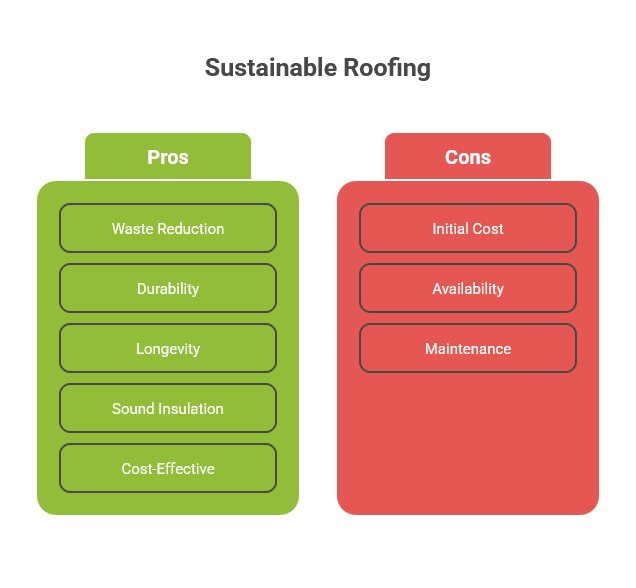
Energy-efficient remodeling represents one of the smartest investments Houston homeowners can make. Rising utility costs, increasing summer temperatures, and aging home infrastructure all point toward efficiency upgrades as a practical priority.
Houston Builders serves homeowners within 50 miles of South Houston, covering Harris, Fort Bend, Galveston, Brazoria, and Montgomery Counties. Our team brings over a decade of local experience to every project. View our complete service area coverage and browse project examples on our blog.
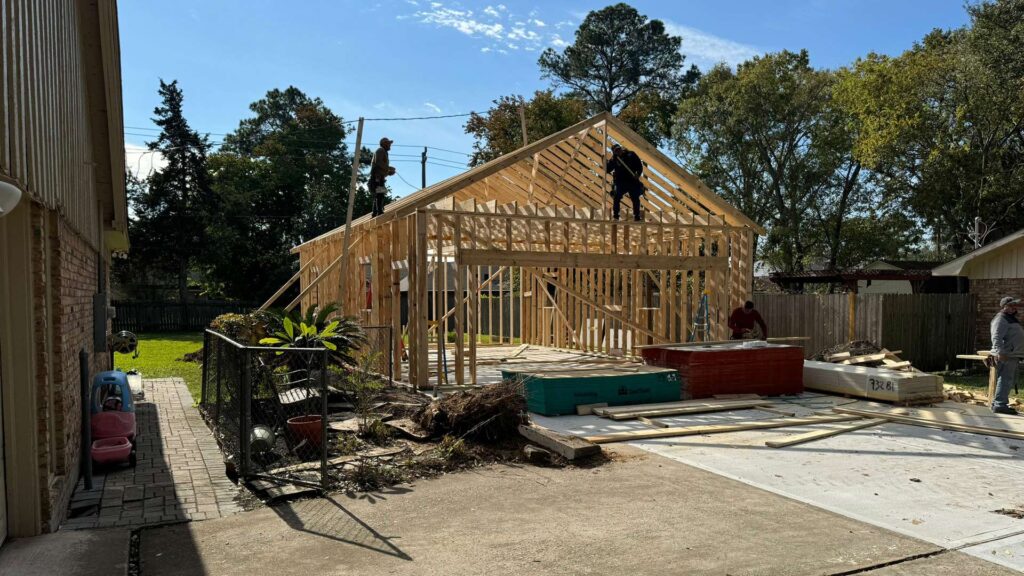
We also handle specialty projects, including balcony waterproofing, fireplace and chimney work, flooring installations, and exterior painting. For project costs, check out our chimney costs guide and garage transformation showcase.
See more of our work and approach in this walkthrough of a recent kitchen transformation:

Take the Next Step
Ready to make your Houston home more energy-efficient? Contact Houston Builders for a free consultation. We’ll assess your home’s current efficiency and develop a plan that delivers real results. Call us at (832) 888-1036 or email amir@graphicatz.com to schedule your appointment.
Energy-efficient remodeling isn’t just about saving money on utility bills. It’s about creating a more comfortable home that handles Houston’s extreme weather without constant strain on your systems and your wallet.

Official Resources for Houston Homeowners
- City of Houston Permitting Center – Building permit applications and requirements
- U.S. Department of Energy – Energy Efficient Home Design – Federal guidelines and resources
- Texas Department of Licensing and Regulation – Verify contractor licensing