

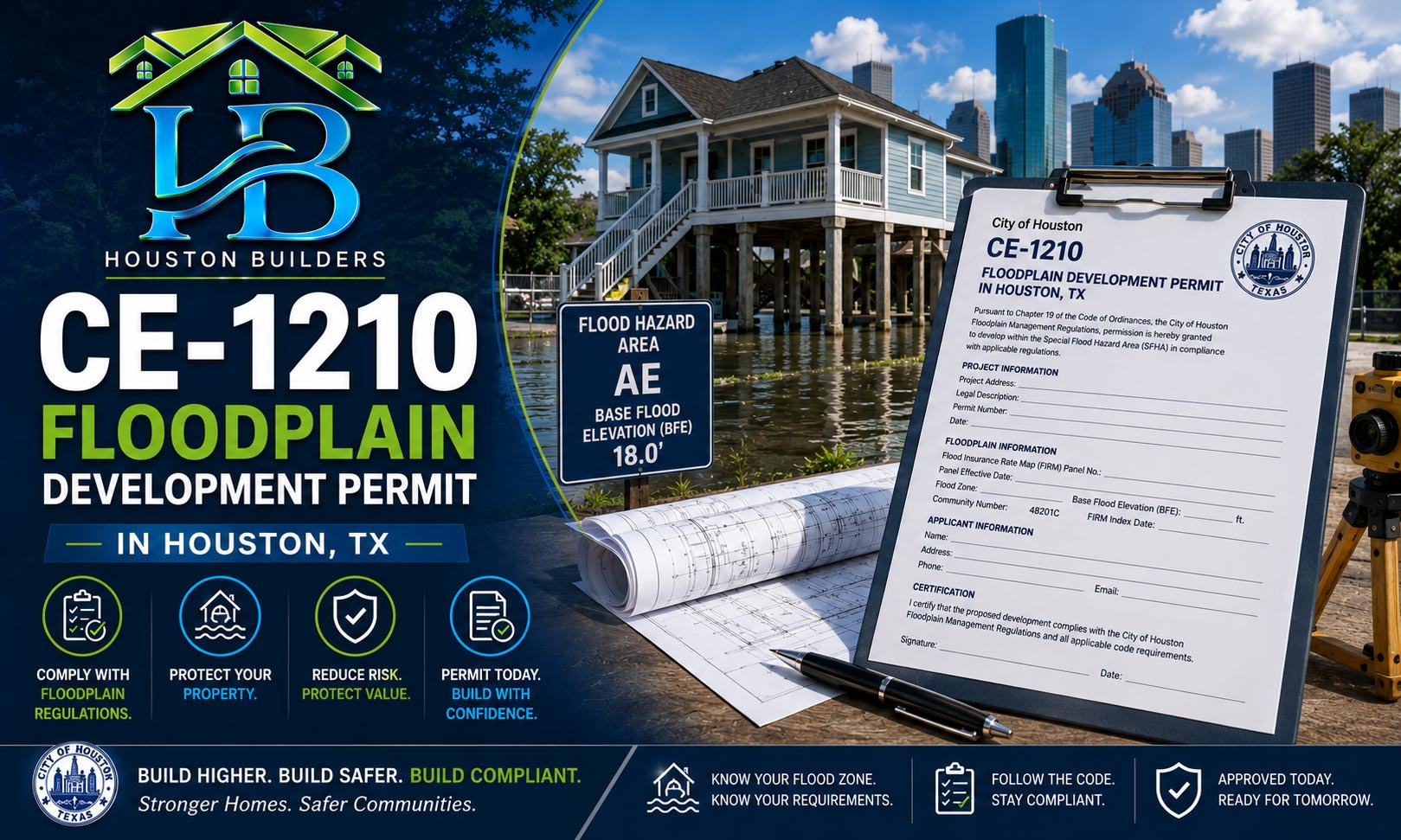
The Gatekeeper for Meyerland, Bellaire, and Houston Floodplain Remodels
CE-1210 Floodplain Development Permit is one of the most important forms a Houston-area homeowner may face before remodeling, rebuilding, adding square footage, repairing storm damage, or changing site drainage in a floodplain. In neighborhoods like Meyerland, Bellaire, Braeswood, Westbury, Willow Meadows, and parts of southwest Houston, this form can decide whether a project moves forward as planned, needs elevation work, requires drainage review, or must be redesigned before permits can continue.
At Houston Builders, Joe G. treats CE-1210 as the floodplain gatekeeper. A homeowner may call about a kitchen remodel, room addition, garage rebuild, bathroom expansion, exterior repair, patio enclosure, or flood damage restoration. But if the property sits in a regulated floodplain, the first question is not “What tile do you want?” or “Where should the island go?” The first question is “What does the floodplain allow us to do?”

Floodplain rules are not paperwork for paperwork’s sake. They protect the home, the neighbor, the drainage system, and future buyers. The City of Houston’s construction code list includes current residential, building, existing building, mechanical, plumbing, electrical, energy, and design load codes, and Houston floodplain work must be coordinated with the correct local review path. The Houston Permitting Center is part of Houston Public Works, and the City lists permit contact information through the Houston Public Works website.
 Why Meyerland and Bellaire Need a Different Remodel Mindset
Meyerland and Bellaire are not ordinary remodeling markets. Many homes in these areas sit in or near flood-sensitive zones. Some homeowners have already repaired after past storms. Some houses have been elevated. Some lots have drainage challenges that do not show up during dry weather. Others look safe until a heavy storm reveals how water moves through the street, yard, driveway, garage, or side setback.
That is why CE-1210 comes before the fun design decisions. If the home is in the floodplain, the remodel team must understand elevation requirements, substantial improvement limits, flood-resistant materials, utility placement, fill, drainage, and whether the work changes the building footprint. Bellaire’s official floodplain guidance tells property owners to contact Development Services before building, filling, or developing, and it notes that building codes and flood damage prevention rules include special floodplain provisions.
We completed a planning review near Meyerland Plaza where the homeowner wanted a kitchen expansion and garage repair. The first design conversation was not cabinet color. It was whether the proposed work affected the floodplain review path, how much work counted toward improvement value, and whether any site changes could affect drainage.
“In Meyerland and Bellaire, a remodel can look simple from inside the house, but the floodplain can change the whole plan. We check that early because nobody wants to design a project twice.”
Table 1: What CE-1210 Helps Decide
| Floodplain Question | Why It Matters | Project Impact | Houston Builders Checkpoint |
|---|---|---|---|
| Is the property in a regulated floodplain? | Floodplain status can trigger extra review and construction limits. | Permit path, elevation, materials, and drainage may change. | We check floodplain conditions before design is locked. |
| Is the work repair, remodel, addition, or rebuild? | Different scopes can trigger different rules. | A repair may move differently than a major addition. | We define the scope clearly before permit submittal. |
| Does the project count as substantial improvement? | Substantial improvement can trigger higher compliance requirements. | Budget, design, elevation, and feasibility can change. | We compare project scope and cost early. |
| Will fill, grading, or paving change drainage? | Water cannot be pushed onto neighbors or trapped at the home. | Site plan, drainage plan, and concrete design may change. | We review patios, driveways, additions, and grading together. |
| Are utilities below flood risk levels? | Electrical, HVAC, and mechanical systems can be damaged by flooding. | Equipment may need relocation or elevation. | We check panel, A/C, water heater, and utility locations. |
| Are materials appropriate below flood levels? | Some materials perform poorly after flood exposure. | Wall, floor, trim, and insulation choices may change. | We separate durable flood-aware materials from standard finishes. |
 The Substantial Improvement Trap
The phrase “substantial improvement” is where many homeowners get surprised. In floodplain areas, a project that seems like a normal remodel can become a bigger regulatory issue if the cost of improvements reaches a threshold tied to the value of the structure. Once that line is crossed, the home may need to meet current floodplain standards, which can affect elevation, design, utilities, and budget.
This is why homeowners should not split a project into pieces just to avoid the conversation. A kitchen remodel this month, bathroom remodel next month, and garage repair after that may still be looked at as related work depending on timing and review. The safer move is to plan honestly and understand the floodplain implications before construction begins.
We reviewed a Bellaire-area renovation where the owner wanted roofing, interior repairs, a kitchen remodel, and exterior siding. The work was not one giant addition, but the total scope mattered. Joe G. walked the owner through the importance of counting the right work before moving forward.
Table 2: Small Remodel or Substantial Improvement Risk?
| Project Scope | Floodplain Risk Level | Why It Matters | Planning Move |
|---|---|---|---|
| Cosmetic interior updates | Lower | May not affect structure, utilities, or footprint. | Confirm whether any hidden trade work is included. |
| Kitchen remodel with layout changes | Medium | Plumbing, electrical, walls, and value can add up. | Define cost and scope before permit filing. |
| Bathroom addition | Higher | Adds footprint, plumbing, electrical, and finish value. | Check floodplain status before design. |
| Garage rebuild | Higher | May involve slab, framing, roof, electrical, and drainage. | Review floodplain permit and elevation needs early. |
| Flood damage restoration | High | Repair cost may trigger substantial damage or improvement review. | Document damage, repair scope, and value carefully. |
| Whole-home renovation | High | Total scope can cross floodplain thresholds quickly. | Build a full permit and budget strategy before demo. |
“The dangerous remodel is the one that pretends the floodplain does not exist. If we know the rules early, we can guide the design. If we find out late, the job can stop cold.”
 Floodplain Budgeting Is Not Like Standard Remodeling
Floodplain projects need a budget that includes more than materials and labor. Homeowners may need surveys, elevation certificates, drainage review, engineering, flood-resistant materials, equipment relocation, higher foundation work, additional documentation, or permit revisions. A low remodel estimate that ignores floodplain conditions can become expensive after review begins.
Houston Builders prices floodplain work by risk, access, permit needs, utility impacts, elevation issues, drainage, and project scope. A bathroom remodel inside an elevated compliant home is different from a ground-level addition in a floodplain. A garage repair in Meyerland is different from a standard garage repair outside a flood-risk area.
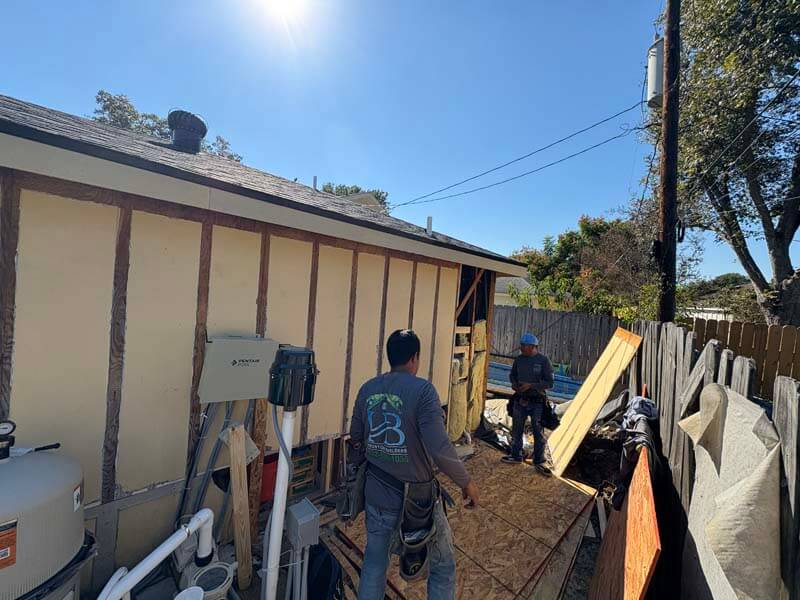
We completed a floodplain-aware repair review in the Meyerland area where the homeowner had received a low repair quote after storm damage. That quote did not account for floodplain paperwork, material choices, or utility concerns. Once the actual permit path was considered, the scope became clearer and more realistic.
Table 3: Floodplain Project Cost Drivers
| Cost Driver | Typical Work Included | Estimated Cost Range | Watchout |
|---|---|---|---|
| Floodplain permit support | Scope review, form preparation, coordination, documentation. | $1,350 to $5,400 | Costs rise when scope changes after submittal. |
| Elevation or survey documents | Site elevation review, elevation certificate, survey support. | $1,350 to $6,750+ | Needed information depends on location and scope. |
| Flood damage repair | Demo, drying, framing repair, wall rebuild, flooring, finishes. | $13,500 to $81,000+ | Repair cost may affect substantial damage review. |
| Utility elevation or relocation | Electrical, HVAC, water heater, or mechanical equipment adjustment. | $5,400 to $40,500+ | Equipment location can trigger trade coordination. |
| Flood-aware room addition | Foundation, elevation planning, framing, utilities, finishes. | $135,000 to $324,000+ | Foundation and elevation requirements drive cost. |
| Garage rebuild in floodplain | Slab or foundation, framing, roof, doors, electrical, drainage. | $108,000 to $243,000+ | Use, elevation, and floodplain status change the scope. |
 Elevation Is the Design Decision Nobody Can Ignore
In a floodplain, the finished floor elevation can control what the project is allowed to become. New construction, substantial improvements, and some rebuilds may need elevation review before the project can move forward. That can change steps, ramps, porches, garage access, driveways, HVAC placement, and even how the addition connects to the existing home.
Elevation is not only about raising a house. It is about designing a project so floodwater risk is addressed. Utilities may need protection. Materials below certain elevations may need to be flood-resistant. Access into the home may need to be rethought. The site may need to manage water without pushing it toward a neighbor.
We reviewed a Meyerland addition where the homeowner wanted a flat transition from the existing living room into the new space. Floodplain review made that more complicated. The design had to account for existing floor elevation, new work, drainage, and the permit requirements before the layout could be finalized.
Table 4: Elevation Questions Before Design
| Question | Why It Matters | Design Impact | Best Time to Answer |
|---|---|---|---|
| What is the current finished floor elevation? | Shows where the home sits relative to flood requirements. | May affect additions, repairs, or rebuilds. | Before design starts. |
| Is the work a new structure or substantial improvement? | Can trigger current elevation standards. | May require raising new or existing portions. | Before budget approval. |
| Where will HVAC equipment sit? | Flood-prone equipment is costly to replace. | Platforms, relocation, or elevated placement may be needed. | During mechanical planning. |
| Will electrical work be below flood-prone levels? | Floodwater and electrical systems are a safety concern. | Panel, outlets, and equipment placement may change. | Before electrical rough-in. |
| How will people enter the elevated space? | Steps, landings, and ramps affect site layout. | Access design and hardscape may change. | During site planning. |
| Where will water go during a heavy storm? | Site water must not be trapped or redirected badly. | Drainage, grading, and paving may change. | Before concrete or fill work. |
“Elevation is not a detail we can fix with trim. It controls the shape of the project. In a floodplain, we want to know the elevation story before we draw the dream version.”
 Fill, Grading, and Drainage Can Make or Break Approval
Floodplain development is not only about the building. It is also about the dirt, concrete, paving, patios, driveways, and grading around it. Adding fill, changing grade, expanding a driveway, or building a patio can affect how stormwater moves. In a floodplain area, that movement matters.
Houston Chapter 19 materials have described mitigation planning as comparing existing and proposed site elevations, with cut and fill below the 500-year flood elevation being part of the review conversation. For homeowners, the key takeaway is simple: do not move dirt or pour hard surfaces in a floodplain without checking the permit path first.
We completed a drainage review in Bellaire where the homeowner wanted a new patio and side-yard walkway along with interior renovations. The patio seemed like a small add-on, but the lot was flat and already held water after storms. We redesigned the hardscape to keep water moving away from the home and neighbor.
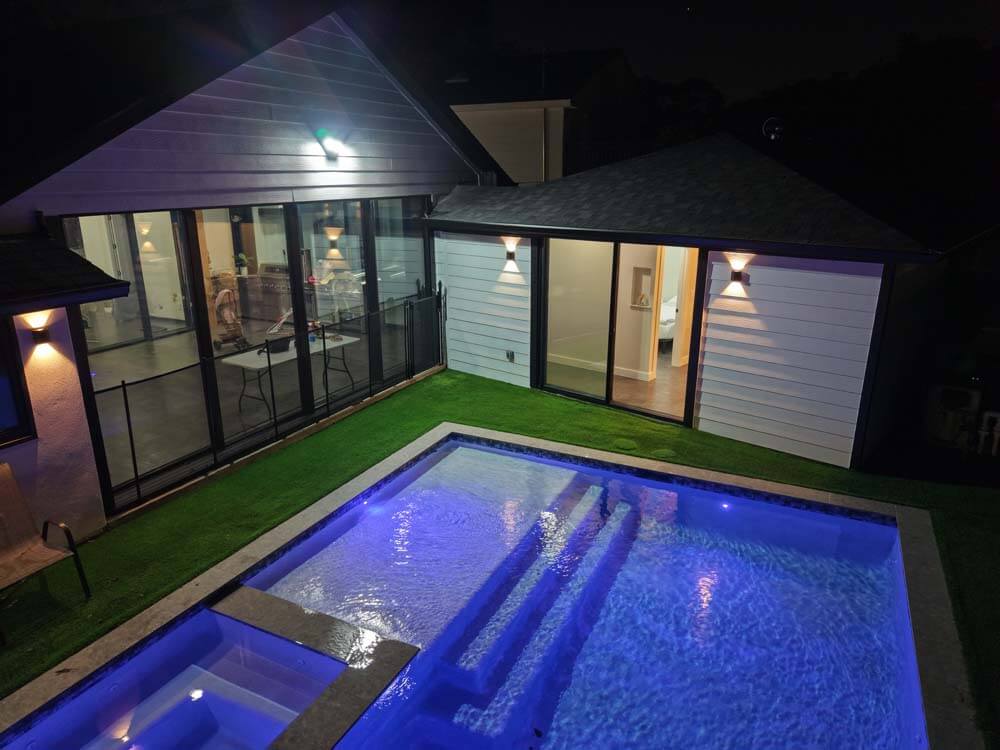
Table 5: Site Work That Can Trigger Floodplain Concerns
| Site Work | Floodplain Concern | Possible Problem | Planning Move |
|---|---|---|---|
| Adding fill | Fill can displace flood storage or redirect water. | Water may move toward a neighbor or structure. | Review cut, fill, and drainage before delivery. |
| New patio | Hard surface changes runoff. | Water can pond near doors or exterior walls. | Plan slope and impervious cover together. |
| Driveway expansion | More paving means more runoff. | Garage or street drainage can be affected. | Review driveway slope and floodplain requirements. |
| Garage slab work | Slab elevation and use matter. | Floodwater may enter or become trapped. | Coordinate elevation, access, and drainage. |
| Room addition foundation | New footprint changes site water movement. | Water can collect at old-to-new transitions. | Plan foundation, elevation, and grading together. |
| Pool or yard excavation | Excavation changes site elevations. | Water storage and drainage paths may change. | Coordinate with floodplain review before digging. |
 Flood Damage Repair Is Not the Same as Ordinary Water Damage
A burst pipe and floodwater are not the same problem. Floodwater can affect walls, floors, insulation, cabinets, electrical systems, HVAC equipment, framing, and indoor air quality. In a floodplain, repair work may also need to be reviewed for substantial damage or substantial improvement rules.
Houston Builders handles flood damage repair with documentation in mind. We define what was damaged, what must be removed, what can be saved, and what must be rebuilt with better materials or elevated systems. The repair plan should match both the home’s condition and the floodplain permit requirements.
We reviewed a flood-damaged home near Brays Bayou where the homeowner wanted to “put it back the way it was.” That is understandable emotionally, but in the floodplain, the permit path may require a better answer. We helped separate emergency cleanup from permit-sensitive reconstruction.
Table 6: Flood Damage Repair Checklist
| Repair Area | What to Check | Why It Matters | Houston Builders Step |
|---|---|---|---|
| Wall cavities | Wet insulation, framing, wiring, and hidden debris. | Closed wet walls can lead to long-term damage. | Open affected areas and document conditions. |
| Flooring | Subfloor, slab moisture, wood swelling, and adhesive failure. | Floor replacement can fail if moisture remains. | Dry and test before reinstalling finishes. |
| Electrical | Outlets, wiring, panel exposure, and device damage. | Floodwater creates safety concerns. | Have electrical work reviewed before reuse. |
| HVAC | Outdoor units, ductwork, air handlers, and controls. | Flooded equipment may be unsafe or unreliable. | Review equipment location and replacement needs. |
| Cabinets | Swelling, contamination, hidden mold, and attachment. | Cabinets can hold moisture behind finishes. | Remove damaged units and inspect wall base. |
| Permit threshold | Repair cost compared with structure value. | May affect substantial damage review. | Track repair scope and cost carefully. |
“After a flood, speed matters, but the right kind of speed matters more. We dry, document, and plan before we rebuild, because the permit path can affect what goes back.”
 How CE-1210 Connects to Houston Builders Services
CE-1210 can affect many Houston Builders services. Water damage restoration is the obvious one after flooding, but floodplain review can also affect room additions and conversions, kitchen remodeling, bathroom remodeling, roofing, concrete work, and exterior paint and siding.
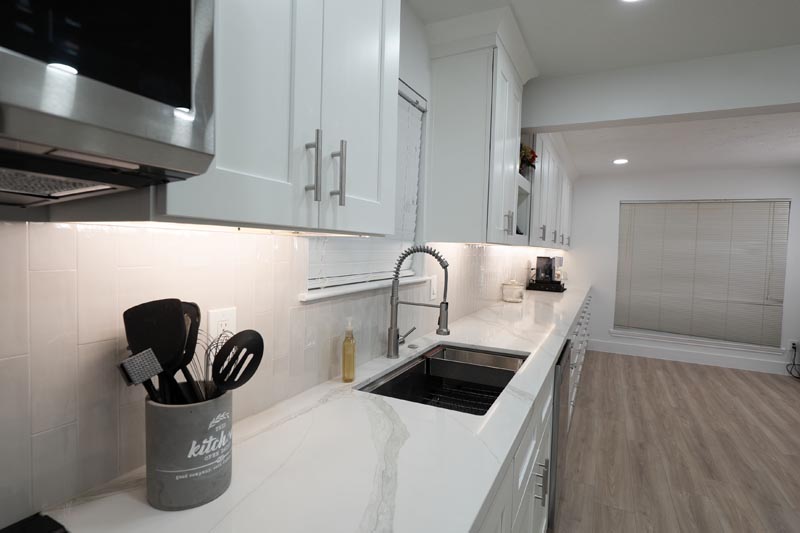
A kitchen remodel can trigger substantial improvement review if it is part of a larger project. A bathroom addition can change footprint and plumbing. Concrete work can change drainage. Roofing may be part of a larger repair package after storm damage. Siding may need flood-resistant detailing in vulnerable areas. The form is about the property’s risk, not just the room being remodeled.
Table 7: Services and Floodplain Concerns
| Service | Floodplain Concern | Possible Delay | Planning Move |
|---|---|---|---|
| Water damage restoration | Flood damage may trigger documentation and review. | Repair scope may need approval before rebuild. | Document damage and costs early. |
| Room additions | New footprint and elevation may be regulated. | Design may need elevation or drainage revisions. | Check CE-1210 before drawings are final. |
| Kitchen remodeling | Cost may contribute to substantial improvement. | Permit review may ask for broader scope information. | Track total project cost and related work. |
| Bathroom additions | Plumbing, footprint, and elevation can matter. | Floodplain review may change design. | Review fixture locations and elevation early. |
| Concrete work | Paving and grading affect runoff. | Drainage review may slow site work. | Plan impervious cover, slope, and drainage before pour. |
| Exterior siding | Flood-prone walls need material and moisture planning. | Finish work may need durability review. | Choose materials appropriate to the risk area. |
How CE-1210 Affects the Timeline
Floodplain review can add time, especially if the project scope is unclear or documents are missing. The fastest floodplain project is not the one that ignores the form. It is the one that prepares the right information early: property location, elevation data, site plan, scope, cost, drainage details, and utility impacts.
For a standard non-floodplain remodel, Houston Builders often moves quickly once scope, permits, and materials are aligned. In a floodplain, the schedule must allow for CE-1210 review, possible documentation requests, and design changes if the project triggers stricter rules. Early planning still saves time because it avoids late redesigns.
Table 8: Timeline Comparison With Early Floodplain Planning
| Phase | Slow Path | Houston Builders Path | How Time Is Saved |
|---|---|---|---|
| Concept design | Design is drawn before floodplain status is checked. | Floodplain status is reviewed before design is locked. | Fewer redesigns. |
| Scope pricing | Budget ignores floodplain documents and elevation issues. | Floodplain costs are considered early. | More realistic budget. |
| Permit preparation | CE-1210 is discovered after submittal. | Floodplain permit needs are included in the plan. | Cleaner permit package. |
| Site work | Fill, grading, or concrete starts before review. | Drainage and site changes are planned before work. | Less rework. |
| Utility planning | Equipment location is revised late. | HVAC, electrical, and water heater locations are reviewed early. | Fewer trade conflicts. |
| Finish work | Materials are ordered before flood-resistant needs are known. | Material choices match the permit path. | Fewer substitutions. |
“Floodplain review does not have to ruin a schedule. What ruins the schedule is pretending it will not apply, then finding out after the design and budget are already set.”
 Warning Signs Before You Start a Floodplain Remodel
Some warning signs should stop a homeowner from rushing into demolition. These signs do not mean the project cannot happen. They mean CE-1210 and floodplain planning should be handled before contracts, materials, and schedules get too far ahead.
Check these before approving the remodel
- The property has flooded before or sits near known flood-prone streets.
- The project includes an addition, garage rebuild, or major repair package.
- The work includes fill, paving, driveway changes, or patio expansion.
- The home has electrical, HVAC, or water heater equipment near ground level.
- The project cost is large compared with the structure value.
- The homeowner wants to rebuild “exactly as before” after flood damage.
- The site holds water after heavy rain or drains toward a neighbor.
Table 9: Common Floodplain Mistakes and Better Fixes
| Mistake | Why It Causes Trouble | Better Fix | Result |
|---|---|---|---|
| Starting demo before CE-1210 review | Scope may trigger rules not yet planned for. | Check floodplain permit needs before demolition. | Cleaner project path. |
| Ignoring total project cost | Substantial improvement review may be missed. | Track related work and costs early. | Fewer permit surprises. |
| Pouring concrete without drainage review | Runoff may worsen flooding or affect neighbors. | Review grading, fill, and impervious cover first. | Better site performance. |
| Leaving equipment low | Floodwater can damage HVAC, electrical, or water heaters. | Consider elevated or protected equipment locations. | Lower future repair risk. |
| Using standard materials in vulnerable areas | Flood-prone materials fail faster. | Use appropriate materials where risk exists. | More durable repair. |
| Designing without elevation data | Finished floor and access may be wrong. | Get elevation information before final design. | Smarter layout and budget. |
 Maintenance After a Floodplain Remodel
Floodplain remodeling does not end when the project is complete. Homeowners should keep drainage paths clear, inspect after storms, keep flood documentation organized, and maintain elevated or protected equipment. Small maintenance habits can prevent expensive repairs later.
Table 10: Floodplain Home Maintenance Schedule
| Timeframe | What to Check | Why It Matters | Homeowner Action |
|---|---|---|---|
| Before storm season | Drains, gutters, downspouts, equipment platforms, and site grading. | Blocked water paths increase flood risk. | Clear debris and inspect drainage. |
| After heavy rain | Yard ponding, garage water, wall stains, and exterior doors. | Early signs show where water is moving. | Take photos and note water depth or duration. |
| Every 3 months | HVAC platforms, water heater areas, electrical panel area, and crawl or lower spaces. | Protected systems still need maintenance. | Keep access clear and watch for corrosion. |
| Every 6 months | Exterior caulk, siding base, concrete slope, and foundation perimeter. | Small gaps can become water entry points. | Repair openings before storm season. |
| Every year | Elevation documents, permit records, insurance paperwork, and repair history. | Records matter during resale, insurance, and future permits. | Keep digital copies in one folder. |
| After flood event | Electrical, HVAC, walls, floors, cabinets, and plumbing fixtures. | Floodwater can create hidden damage. | Call for inspection before rebuilding. |
“A floodplain home needs a maintenance plan, not just a remodel plan. Keep water moving, keep records organized, and check the house after big rain.”
Project Video: Why Planning Matters Before Floodplain Work Starts
Here is a quick jobsite look at why sequencing, planning, and clear setup help remodeling work move faster once construction begins.
Final Takeaway: CE-1210 Decides the Rules Before the Remodel Starts
CE-1210 Floodplain Development Permit matters because floodplain remodeling is different. In Meyerland, Bellaire, Braeswood, Westbury, Willow Meadows, and other flood-sensitive Houston areas, this form can affect whether a remodel, addition, rebuild, repair, driveway, patio, or site change can move forward as planned.
The best time to think about CE-1210 is before demolition, before design is final, before concrete is poured, and before materials are ordered. Floodplain status, substantial improvement risk, elevation, drainage, fill, utility placement, and material choices all belong near the beginning of the project.
Houston Builders helps homeowners plan floodplain projects with clear scope, realistic budgets, permit-aware design, and practical construction sequencing. In a floodplain, the smartest remodel is not the fastest one on paper. It is the one that clears the gatekeeper before the work begins.
Houston Builders serves Meyerland, Bellaire, Braeswood, Westbury, Willow Meadows, River Oaks, West University, Memorial Village, Tanglewood, Houston Heights, Montrose, Greenway, Upper Kirby, 77005, 77006, 77007, 77008, 77018, 77019, 77024, 77035, 77040, 77057, 77077, 77096, 77401, and 77494. Contact Houston Builders today at 832-888-1036 or visit us at 10101 Fondren Rd, Houston, TX 77096, to schedule your free estimate.
External Links
- Houston Permitting Center
- City of Houston Permitting Center: Construction Codes
- Houston Public Works
- City of Bellaire: Development in the Floodplain
- Harris County Flood Education Mapping Tool
- FEMA Flood Map Service Center
::contentReference[oaicite:0]{index=0}