

Why Houston Remodels Must Respect Drainage Rules
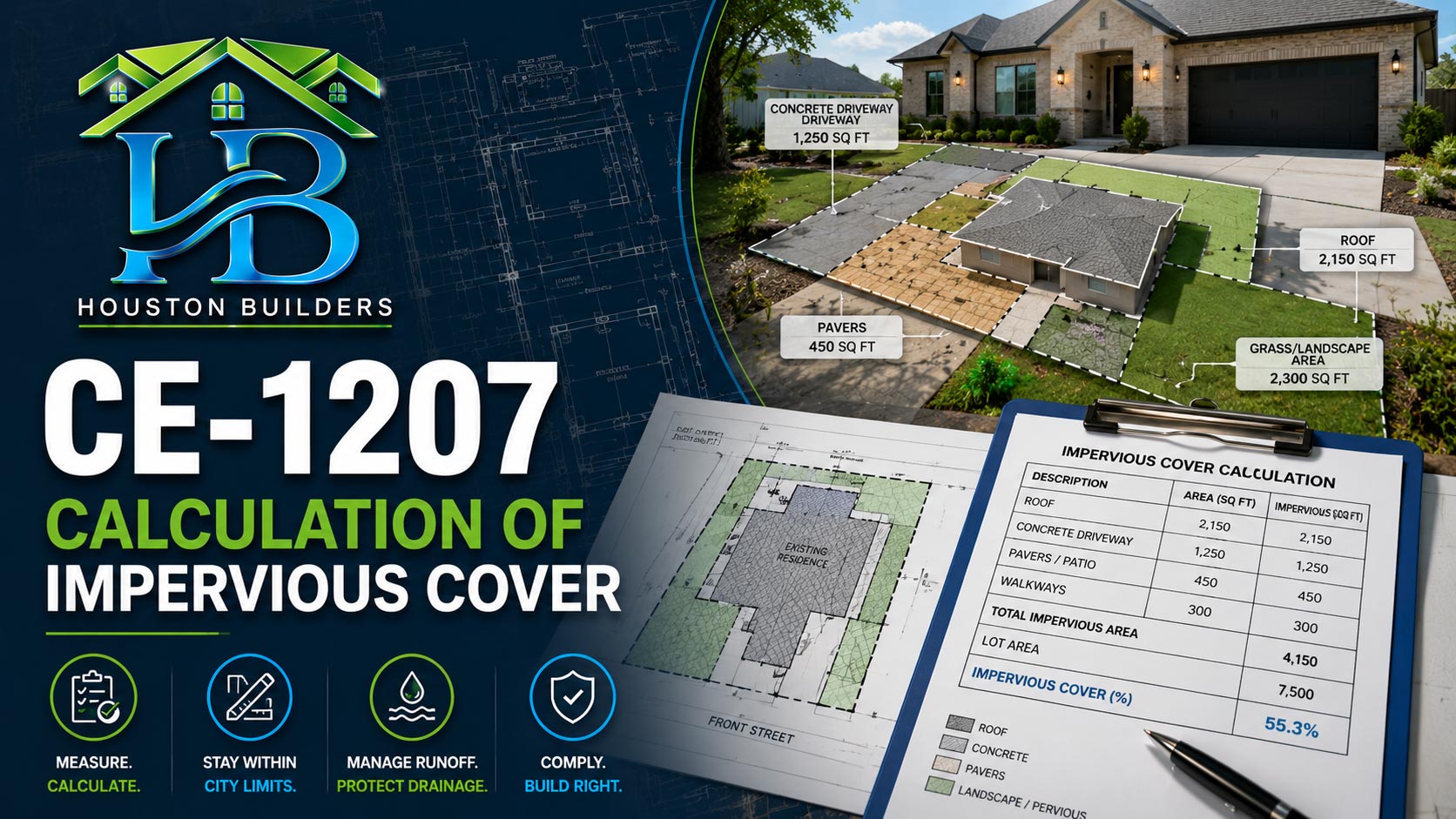
CE-1207 Calculation of Impervious Cover is one of the most important Houston permit forms for homeowners planning concrete, patios, driveways, room additions, walkways, garage rebuilds, patio covers, and exterior remodels. In Houston, you cannot just keep pouring concrete wherever you want. The City needs to know how much of your lot is covered by “hard” surfaces because those surfaces change where rainwater goes. For full replaster, bathroom remodeling, water damage restoration, roofing, siding, and interior repairs, impervious cover still matters when the damage starts outside with poor drainage.
At Houston Builders, Joe G. treats CE-1207 as a drainage reality check. A homeowner may call about a patio, driveway extension, outdoor kitchen slab, garage rebuild, room addition, or side-yard walkway. The first question is not only “How big do you want it?” The real question is, “Will this hard surface push water toward the home, the neighbor, or the street in a way that violates Houston drainage rules?”
Houston’s heavy rain, flat lots, clay soil, older homes, and storm seasons make drainage planning serious. A small slab can create a big problem if it sends water toward a bathroom wall, foundation, back door, garage, or balcony. CE-1207 helps calculate the hard surfaces so the project can be planned before the concrete truck arrives.
 What Impervious Cover Means in Plain English
Impervious cover means surfaces that water cannot easily soak through. Concrete driveways, patios, sidewalks, pavers on compacted base, building footprints, garages, roofed additions, sheds, and some hardscape areas can all count. These surfaces change rainfall behavior. Instead of soaking into soil, water runs across the surface and has to go somewhere.
That “somewhere” is the reason CE-1207 exists. If too much of a lot is covered, runoff can increase. Water may pond near the foundation, rush toward a neighbor, overload drainage paths, or push back toward a door. In a city like Houston, where heavy rainfall is normal, hard surfaces need planning.
We completed a patio and drainage review about 1.1 miles from Levy Park near Upper Kirby where the homeowner wanted a larger outdoor slab. The backyard already had a driveway extension, walkway, and existing patio. Before adding more concrete, we measured the hard surfaces and reviewed how water left the property. That step helped avoid a patio that would have looked nice but drained badly.
“Concrete is permanent enough that you should measure twice before pouring once. CE-1207 keeps us honest. It tells us whether the lot can handle more hard surface and whether the drainage plan makes sense.”
Table 1: What Usually Counts as Impervious Cover
| Surface or Feature | Why It May Count | Drainage Concern | Houston Builders Planning Step |
|---|---|---|---|
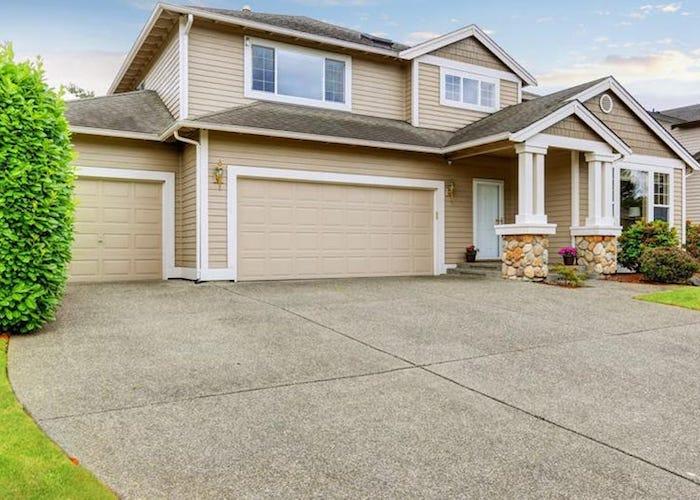
| Concrete driveway | Water runs off instead of soaking in. | Runoff can move toward garage, street, or side yard. | Measure existing driveway before proposing an extension. |
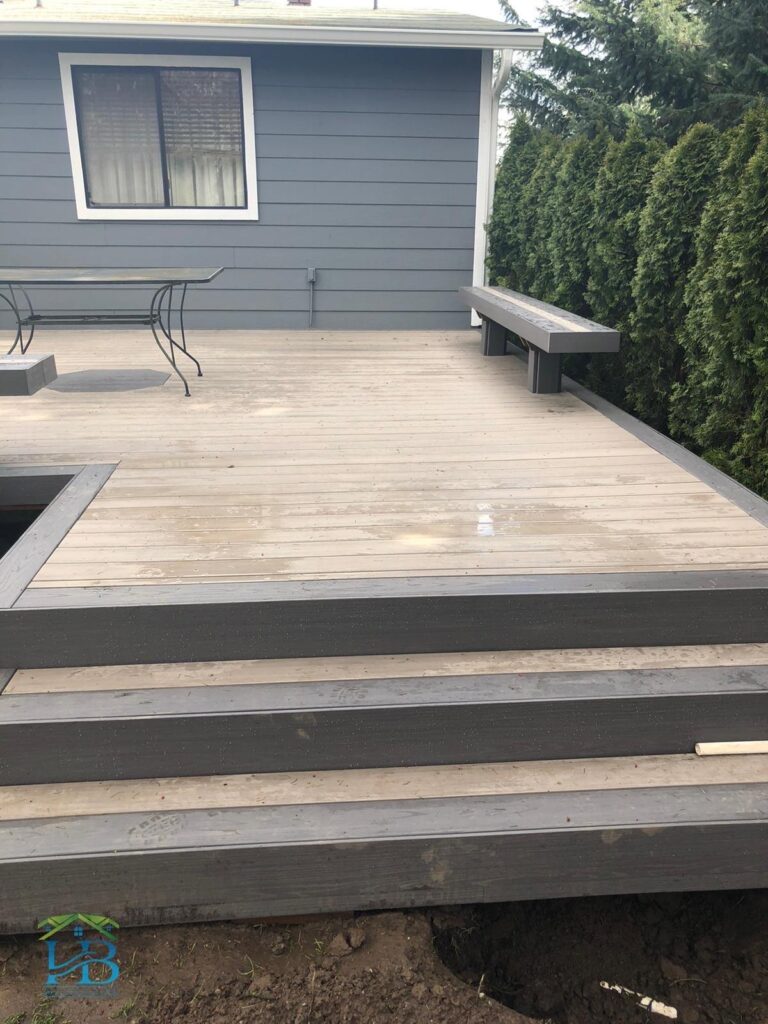
| Concrete patio | Creates a hard surface behind the home. | Bad slope can push water toward doors or foundation. | Check slope, drains, and yard grade before pouring. |
| Building footprint | Roofed area covers soil and redirects rainwater. | Roof runoff can concentrate at gutters and downspouts. | Include additions, garages, and covered spaces in the calculation. |
| Walkways | Even narrow paths add up across a lot. | Side-yard water can pond against walls. | Plan width, slope, and water path before install. |
| Pavers on compacted base | Some installations do not drain like open soil. | Water may sheet across the surface. | Confirm whether the paver system is permeable or hardscape. |
| Covered patio or outdoor kitchen slab | Combines roof runoff with hard ground surface. | Water can collect at posts, edges, or walls. | Plan roof drainage and slab slope together. |
 Why Houston Limits How Much Concrete You Can Pour
Houston receives heavy rain, and many neighborhoods have flat lots with slow drainage. When more soil gets replaced with concrete, water moves faster and has fewer places to soak in. That can raise the risk of ponding, neighbor drainage disputes, foundation moisture, garage flooding, and interior water damage.
CE-1207 is not trying to stop homeowners from improving their property. It helps make sure the improvement does not create a drainage problem. A driveway extension may be useful. A patio may make the backyard more livable. A room addition may add valuable square footage. But each project needs to fit the lot’s drainage capacity.
We completed a driveway and walkway review about 0.8 miles from Rice Village in 77005 where the homeowner wanted extra parking. The lot already had a wide driveway and rear patio. Instead of guessing, we calculated the hard surfaces and adjusted the layout to keep drainage in mind.
Table 2: Concrete Projects and Drainage Risks
| Project | Why Homeowners Want It | Drainage Risk | Smarter Planning Option |
|---|---|---|---|
| Driveway extension | More parking and easier access. | More runoff toward street, garage, or side yard. | Limit width, slope correctly, and review existing drainage. |
| Backyard patio | Outdoor living, grilling, and seating. | Water can run toward back doors or foundation. | Set slope away from the home and plan drain paths. |
| Side-yard walkway | Cleaner access from front to back yard. | Narrow areas can trap water against the house. | Use proper slope and keep water moving away from walls. |
| Garage slab | Rebuild, storage, parking, or workshop use. | Large slab area changes runoff and grading. | Include roof runoff, slab slope, and driveway tie-in. |
| Outdoor kitchen slab | Cooking, entertaining, and covered use. | Roof runoff and hardscape runoff can combine. | Plan gutters, downspouts, and slab edges together. |
| Room addition foundation | More living space. | Building footprint redirects rainfall from roof to ground. | Plan gutters, grading, drains, and impervious cover before design is final. |
“A patio that drains toward the house is not a patio problem. It becomes a wall problem, a flooring problem, a plaster problem, and sometimes a foundation problem. That is why we talk drainage before concrete.”
 How Impervious Cover Connects to Full Replaster and Interior Repairs
Full replaster sounds like an interior service, but many plaster failures begin outside. If a patio slopes toward the home, a side yard holds water, or a driveway extension traps runoff near a wall, moisture can enter through weak points. Over time, that moisture can stain, crack, soften, or loosen interior finishes.
Houston Builders often sees this after storms. A homeowner calls for wall repair, bathroom remodeling, flooring repair, or full replaster. Once we inspect, the real issue is drainage against an exterior wall or poor runoff control near a slab. If we repair only the inside, the problem comes back.
We completed a full replaster and water damage repair about 1.4 miles from Memorial City Mall in 77024 where the first visible issue was bubbling paint near a bathroom wall. The cause was not the bathroom tile. It was exterior water collecting near the slab after heavy rain. We addressed drainage first, then repaired the wall and finish.
Table 3: Interior Warning Signs That May Point to Impervious Cover Problems
| Interior Symptom | Possible Exterior Cause | Why It Matters | Recommended Action |
|---|---|---|---|
| Cracked plaster near exterior wall | Moisture, movement, or water collecting near the slab. | Surface repair may fail if the wall keeps moving or getting damp. | Check exterior grade, patio slope, and wall condition. |
| Bubbling paint | Water entering from exterior wall, roof edge, or drainage issue. | Paint and plaster can detach from damp surfaces. | Find and fix the moisture source before repainting. |
| Musty smell in bathroom | Humidity plus outside moisture intrusion. | Moisture can damage finishes and indoor air quality. | Review ventilation and exterior drainage. |
| Flooring swelling near door | Patio or walkway draining toward threshold. | Water can damage subfloor and trim. | Correct slope and threshold protection. |
| Wall stain after heavy rain | Wind-driven rain or runoff against exterior wall. | Repeated staining signals an active water path. | Inspect exterior surface, roof edge, and hardscape. |
| Baseboard separation | Moisture near slab or wall base. | Can indicate hidden water movement. | Inspect wall cavity and nearby concrete slope. |
 What CE-1207 Usually Needs From the Site Plan
CE-1207 depends on measurements. The permit package should show the lot, existing structures, existing hard surfaces, proposed hard surfaces, and the calculation that compares hard cover to the lot area. If the project changes runoff, the plan should also consider drainage direction.
For a small project, this can still be important. A 120-square-foot concrete pad may sound minor, but if the lot is already close to its limit, that pad can be the thing that causes a problem. A room addition, garage rebuild, or patio cover can have an even larger impact because it changes both ground cover and roof runoff.
We completed a garage rebuild planning review in 77096 where the homeowner wanted a stronger slab and improved driveway approach. The impervious cover calculation helped us understand how the new slab, driveway, and existing walkways worked together.
Table 4: Site Plan Items for CE-1207
| Site Plan Item | What It Shows | Why It Matters | Common Mistake |
|---|---|---|---|
| Lot dimensions | Total property area. | The impervious cover percentage depends on the lot size. | Using rough guesses instead of measured dimensions. |
| Existing home footprint | Current roofed building area. | The house already counts toward hard cover planning. | Forgetting covered porches or attached areas. |
| Existing driveway and walks | Current hardscape already on the lot. | Existing concrete can use up available cover. | Counting only the new concrete. |
| Proposed concrete | New patio, driveway, slab, walkway, or pad. | The new work changes runoff. | Not showing the full proposed size. |
| Accessory structures | Sheds, garages, carports, outdoor kitchens, or covered patios. | These can affect both cover and drainage. | Leaving out older backyard structures. |
| Drainage direction | How water leaves the hard surface. | Runoff should not be pushed into problem areas. | Drawing the slab without showing slope or water path. |
 Cost Planning When Concrete Is Limited
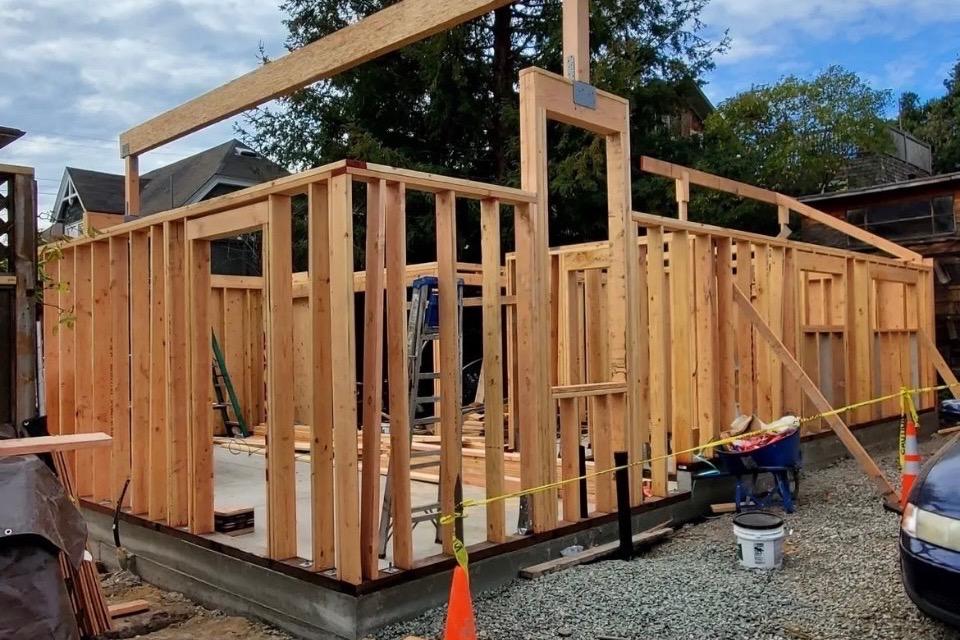
Concrete limits can change the design and budget. If the lot cannot support a large new slab without drainage changes, the project may need a smaller footprint, different layout, added drainage, permeable options, or a revised design. That is why Houston Builders checks these issues before final pricing whenever the project adds hard surface.
For homeowners, the cheapest concrete bid is not always the best deal. A slab that causes water to flow toward the home can lead to water damage restoration, flooring replacement, full replaster, baseboard repair, exterior repairs, and mold concerns. Spending more time on drainage planning can prevent a much larger interior repair later.
Table 5: Cost Ranges for Hardscape and Drainage-Related Projects
| Project Type | Typical Work Included | Estimated Cost Range | CE-1207 Watchout |
|---|---|---|---|
| Small concrete walkway | Demo if needed, base prep, forms, concrete, finish. | $3,375 to $9,450 | Side-yard drainage can be tight. |
| Driveway extension | Layout, base prep, concrete, joints, finish, cleanup. | $8,100 to $27,000 | Existing driveway may already use a large hard surface area. |
| Backyard patio | Excavation, base, forms, concrete, slope, finish. | $9,450 to $33,750 | Must slope away from the home. |
| Covered patio slab | Slab, footings, roof support planning, drainage review. | $21,600 to $67,500+ | Roof runoff and slab runoff must be planned together. |
| Garage rebuild slab | Demo, grading, base, forms, steel, concrete, finish. | $24,300 to $81,000+ | Garage footprint, driveway, and drainage all count. |
| Drainage repair with interior full replaster | Exterior water correction, wall repair, full replaster, paint. | $13,500 to $54,000+ | Interior finish should wait until the water path is fixed. |
“If a homeowner asks for more concrete, I want to know where the water goes after we pour it. That one question can save thousands in future wall, flooring, and plaster repairs.”
 Which Houston Builders Services CE-1207 Can Affect
CE-1207 can affect more than concrete work. Concrete work is the obvious one, but deck and patio projects, room additions and conversions, garage rebuilds, and outdoor structures can all change impervious cover or drainage patterns.
It can also connect to interior services. Water damage restoration may be needed when poor exterior drainage lets water enter. Bathroom remodeling and full replaster may be part of the interior recovery. Exterior paint and siding can involve wall repairs where runoff or splashback caused damage. Roofing connects because roof runoff must be directed away from the home.
We completed an exterior wall repair and interior finish project about 0.7 miles from The Menil Collection in Montrose where a narrow concrete side path trapped water against the home. The repair involved exterior correction, wall repair, and interior finish work. Without drainage review, the plaster would have failed again.
Table 6: Services That May Trigger Impervious Cover Review
| Service | How It Connects to CE-1207 | Possible Drainage Issue | Planning Move |
|---|---|---|---|
| Concrete work | Adds hard surface directly. | Runoff increases or changes direction. | Measure existing and proposed hard surfaces. |
| Room additions | Adds building footprint and roof runoff. | Downspouts may overload nearby areas. | Plan gutters, grading, and impervious cover together. |
| Garage rebuilds | Changes slab, roof, driveway, or access paths. | Large surfaces can redirect water. | Review slab size and driveway tie-in. |
| Deck and patio projects | May add slab, footings, pavers, or roofed cover. | Water can collect under or around structure. | Plan post bases, slope, and drainage. |
| Water damage restoration | May reveal runoff from exterior hardscape. | Interior repairs fail if drainage remains. | Fix water source before rebuilding inside. |
| Full replaster | May repair walls damaged by outside moisture. | New plaster fails if exterior runoff remains. | Inspect exterior water path first. |
 How CE-1207 Planning Helps Us Work Faster
Drainage review can feel like an extra step, but skipping it often costs more time. If impervious cover is checked late, the project may need redesign, a smaller slab, extra drainage, revised drawings, or a permit correction. Houston Builders works faster by asking the drainage questions before the schedule depends on an unfinished calculation.
For a standard bathroom remodel with full replaster, the common industry timeline may be 15 to 25 working days after approvals and materials are ready. Houston Builders often targets 8 to 13 working days when the layout stays mostly in place and hidden damage is limited. For concrete, patio, addition, and drainage-related work, timelines vary more, but early CE-1207 review still reduces stops.
Table 7: Timeline Comparison With Early CE-1207 Review
| Phase | Without Early Review | With Houston Builders Review | Why It Moves Faster |
|---|---|---|---|
| Initial design | Owner chooses size before checking limits. | Lot and hard surfaces are measured early. | Design starts with realistic boundaries. |
| Permit preparation | Calculation may be missing or incomplete. | CE-1207 information is prepared before submittal. | Reduces correction requests. |
| Concrete layout | Slab may need resizing after review. | Layout is adjusted before pricing and scheduling. | Avoids redesign after approval. |
| Drainage planning | Water path is discovered after forms are set. | Slope and runoff are planned before work starts. | Prevents field changes. |
| Material scheduling | Crews may wait on revised permit details. | Crews are scheduled after the drainage plan is clear. | Less stop-and-start work. |
| Interior repair | Full replaster happens before drainage is fixed. | Water source is corrected before finish work. | Protects the finished repair. |
 Warning Signs Before Adding More Hard Surface
Some lots are already telling you they have drainage problems. Before adding more concrete, watch how water behaves during and after a storm. If water sits for hours, runs toward doors, ponds along a wall, or creates muddy channels around slabs, adding hard surface may make it worse.
Check these signs before approving concrete
- Standing water near the foundation after rain.
- Water running toward the garage or back door.
- Peeling paint or plaster damage on exterior-facing walls.
- Soft soil beside existing patios or walkways.
- Driveway runoff crossing into the neighbor’s property.
- Downspouts dumping onto concrete with no clear exit path.
- Cracked slabs that hold water along the cracks.
“Before we add concrete, I like to see where the rain already goes. The yard tells you a lot after a storm. If water is already sitting against the house, more hard surface is not the first answer.”
Table 8: Maintenance After Concrete, Patio, or Drainage Work
| Timeframe | What to Check | Why It Matters | Homeowner Action |
|---|---|---|---|
| First hard rain | Water direction across new concrete. | Confirms slope and drainage performance. | Watch where water flows and report concerns. |
| First 30 days | Cracks, ponding, edges, and soil washout. | Early signs show whether water is moving properly. | Take photos after rain if you see ponding. |
| Every 3 months | Drains, downspouts, patio edges, and side yards. | Debris can block planned water paths. | Clear leaves, mud, and mulch buildup. |
| Every 6 months | Sealant joints, expansion joints, and wall bases. | Open gaps can let water enter weak areas. | Schedule small repairs before storm season. |
| Every year | Concrete surface, grading, gutters, and exterior walls. | Annual checks prevent water damage. | Walk the property after a heavy rain. |
| After major storms | Interior walls, baseboards, flooring, and exterior drainage. | Storm runoff can reveal new problem areas. | Look for stains, swelling, musty smells, or plaster cracks. |
Project Video: Why Planning Matters Before Work Starts
Here is a quick jobsite look at why planning, sequencing, and clear project setup help remodeling work move faster once construction begins.
Final Takeaway: CE-1207 Protects the Lot, the Home, and the Remodel
CE-1207 Calculation of Impervious Cover matters because Houston lots can only handle so much hard surface before drainage becomes a problem. Concrete, patios, driveways, walkways, additions, garage slabs, covered outdoor spaces, and roofed structures all affect where rainwater goes. The form helps calculate those surfaces before the project creates runoff issues.
For full replaster, bathroom remodeling, water damage restoration, roofing, siding, concrete work, patio projects, room additions, and garage rebuilds, the lesson is simple: drainage comes before finish. A beautiful plaster wall, new bathroom, or fresh floor will not last if exterior water keeps pushing into the home. Houston Builders uses CE-1207 thinking to plan smarter, reduce permit surprises, and protect finished work from repeat damage.
On well-planned bathroom and finish projects, Houston Builders often cuts the standard 15 to 25 working day remodel timeline by about 50 percent, targeting 8 to 13 working days when scope, permits, materials, and field conditions allow. For concrete and drainage-related work, early impervious cover review helps avoid redesigns, corrections, and water problems after the pour.
Houston Builders serves River Oaks, Bellaire, West University, Memorial Village, Tanglewood, Houston Heights, Montrose, Greenway, Upper Kirby, 77006, 77007, 77077, 77494, 77401, 77024, 77057, 77040, 77018, 77019, 77005, 77008, 77096, and 77035. Contact Houston Builders today at 832-888-1036 or visit us at 10101 Fondren Rd, Houston, TX 77096, to schedule your free estimate.